 e-ingatlanközvetítők.hu
Dr. Surányi Balázs
• 14 perc olvasás
Selling Property in Hungary From Abroad: A Complete Guide

Selling property in hungary from abroad: should you pax?tax
Owning property in Hungary while living in another country is common. Selling it, however, raises questions that a seller living locally rarely has to consider.
Do you need to travel to Hungary to sign the contract? Can you appoint someone to act for you? Will a Hungarian bank transfer the purchase price to a foreign bank account? What happens if the buyer uses a mortgage? And where do you pay tax if you are resident abroad?
The good news is that a foreign citizen or a Hungarian owner living abroad can generally sell property in Hungary under the same basic rules as a seller living in Hungary. Living abroad does not prevent the sale.
The difference is in the administration.
Foreign documents, identification, signatures, powers of attorney, payment arrangements and international tax considerations should be planned before a buyer is ready to sign.
This guide explains the process from a seller's perspective.
Kövesse oldalunkat a Google keresőben – így mindig elsők között látja a cikkeinket
Tartalomjegyzék
- Do I need to travel to Hungary to sell my property?
- Practical tasks to arrange in Hungary before the sale
- Can I sign the contract while remaining abroad?
- What personal information is required from a seller living abroad?
- How is the purchase price paid if the seller lives abroad?
- When should I hand over the keys?
- What tax does a non-resident pay when selling property in Hungary?
- Do I have to pay Hungarian tax when selling Hungarian property?
- Is the sale tax-free after five years?
- Do I also pay tax in the country where I live?
- What if there is no double taxation treaty?
- Summary
- Kapcsolatfelvétel
- Gyakran ismételt kérdések
Do I need to travel to Hungary to sell my property?
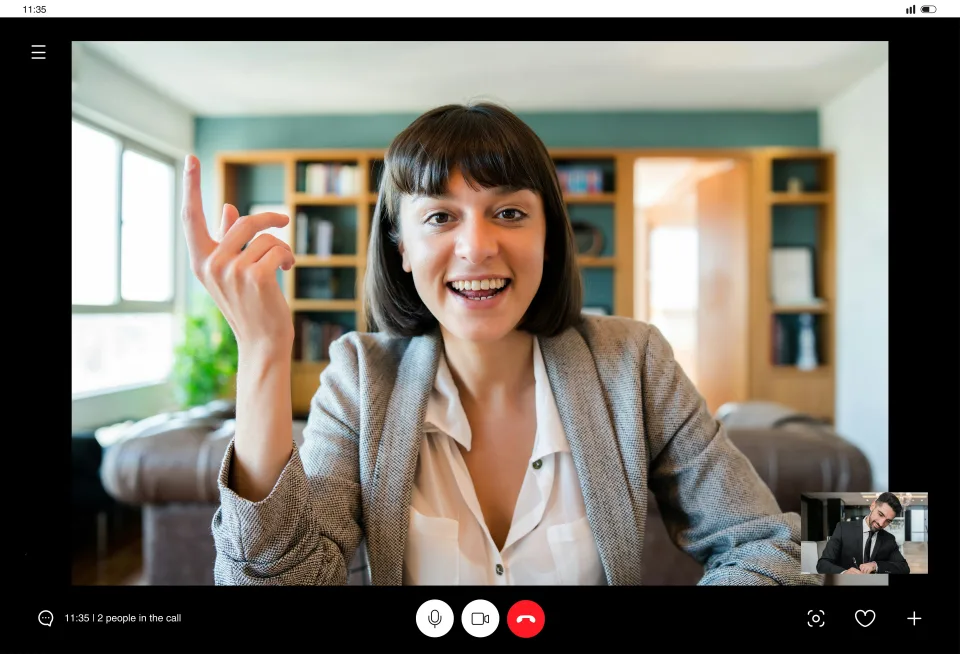
No. You can appoint a Hungarian real estate agent from abroad, market the property without travelling and complete the legal transaction without meeting the lawyer in person. Remote identification, video-based countersigning or a properly prepared power of attorney can be used, depending on the circumstances of the sale.
A real estate agent can be instructed entirely from abroad to value and market the property, arrange viewings, negotiate with buyers and coordinate the practical steps in Hungary.
You do not necessarily need to meet the Hungarian lawyer in person either. The lawyer may identify you by video and arrange remote signing and countersigning in accordance with the applicable professional rules. Alternatively, a representative may sign or act on your behalf under a power of attorney that satisfies Hungarian land registry requirements.
Practical tasks to arrange in Hungary before the sale
Even if the contract can be signed remotely, several physical and administrative tasks must still be completed in Hungary. A local representative, real estate agent or lawyer can coordinate these steps, but some activities require access to the property or documents held by the owner.
- Energy Performance Certificate (Energetikai Tanúsítvány): The seller generally needs a valid certificate for the property. A qualified professional may need to inspect the building or apartment. The certificate should be available when the contract is concluded and must be handed over to the buyer.
- Electrical Safety Inspection (Villamos Biztonsági Felülvizsgálat): A change of ownership may trigger an electrical safety inspection unless a statutory exception applies or a sufficiently recent inspection report is available. The lawyer should check whether the property requires a new inspection before signing.
- Condominium documents: For an apartment, the buyer may need the condominium deed of foundation (társasházi alapító okirat), organisational and operational rules and other relevant condominium documents. These help identify storage areas, parking spaces, common property and any exclusive-use rights that may not be clear from the land registry record.
- Zero-balance certificates (nullás igazolások): Buyers commonly request confirmation that there are no outstanding condominium charges or utility debts. The condominium’s common representative can usually issue a certificate concerning common charges.
- Documents required to remove encumbrances: If the property is subject to a mortgage, enforcement right or another registered encumbrance, the seller must arrange repayment and obtain the appropriate cancellation consent (törlési engedély). The payment schedule should allow the necessary amount to be paid directly to the creditor where required.
- Pre-emption declarations: A co-owner, municipality or another entitled person may have a right of first refusal. The lawyer must determine how the purchase offer should be communicated and whether express waiver declarations can be obtained. A simple informal statement may not always be sufficient for land registry purposes.
- Property handover (Birtokbaadás): Someone must hand over the keys, record the condition of the property and note the final electricity, gas, water and district-heating meter readings. The parties or their representatives should sign a detailed handover protocol (birtokbaadási jegyzőkönyv).
- Utility transfers (Közműátírás): The seller’s utility accounts must be closed or transferred using the final meter readings and the signed handover protocol. A representative may handle this with an appropriate power of attorney. Some procedures can also be completed electronically using Ügyfélkapu+, the Digital Citizenship application or the relevant provider’s online platform.
- Unregistered modifications: Many owners built extensions, terraces, or sheds over the years without updating the official cadastral map, which blocks modern sales. A licensed surveyor may need to prepare a change sketch, while retrospective building-authority documentation may also be required before the land registry map can be updated. Small sheds and other structures do not automatically require registration, so each discrepancy should be assessed separately.
The person handling the handover should receive a sufficiently detailed power of attorney. It should cover the release of keys, signing of the handover protocol, communication of meter readings and, where necessary, dealings with utility providers and the condominium’s common representative.
Selling Property in Hungary While Living Abroad?
You do not have to coordinate the sale from another country on your own. Our lawyer–real estate agent service combines legal preparation, valuation, marketing, buyer communication and contract work in one process.
Read MoreCan I sign the contract while remaining abroad?
Yes. In many cases, you can sell Hungarian property without travelling to Hungary.
Method 1: Remote Identification & Signing (Távazonosítás)
Hungarian lawyers can use remote identification and remote countersigning procedures, which allow the seller to complete key legal steps by video while remaining abroad. Before handling a property transaction, the Hungarian lawyer must identify the client and comply with the applicable anti-money laundering requirements.
This identification can be completed remotely using an approved video communication platform. During the video call, the seller is typically asked to:
- show their identification documents to the camera;
- confirm the personal data required for the transaction;
- make the necessary identification declarations;
- and consent to the recording of the identification process.
The lawyer records and documents the procedure in accordance with the applicable professional rules.
Method 2: Power of Attorney (Meghatalmazás)
You can appoint a trusted relative, friend, or independent attorney in Hungary to act and sign on your behalf. The Land Registry (Földhivatal) requires the Power of Attorney to be in a specific qualified format.
For a Hungarian property transaction, a generic power of attorney notarized abroad is usually insufficient. It must satisfy Hungarian content requirements, carry an Apostille or diplomatic legalisation unless an exemption applies, and be recorded on the prescribed electronic land-registry form by a Hungarian notary.
The power of attorney should therefore be prepared or approved by the Hungarian transaction lawyer before it is signed abroad. It must identify the parties and the property, and specify which documents and land-registry declarations the representative may sign.
Alternatively, a Hungarian attorney can issue a remote power of attorney via video identification (távellenjegyzés).
Can a Hungarian property sale agreement be entirely in English?
An English-only sale and purchase agreement should not be used as the sole document submitted to the Hungarian land registry. The safe solution is a Hungarian agreement or a bilingual Hungarian–English document stating that the Hungarian version prevails. The English text or an interpreter ensures that the foreign party understands the transaction.
The validity of the agreement and its suitability for land registry registration are two separate questions. A contract is not automatically invalid merely because one party does not speak Hungarian or because an English translation has also been prepared. However, the document submitted for the Hungarian land registry procedure must comply with the applicable Hungarian formal and language requirements.
Hungarian court practice supports three commonly used solutions:
- a Hungarian agreement accompanied by an English translation;
- a bilingual Hungarian–English agreement stating that the Hungarian version prevails if the two texts differ;
- or a Hungarian agreement signed with the assistance of an interpreter.
The English version primarily helps the foreign party understand the transaction. It does not normally replace the Hungarian document used in the land registry procedure.
Where can I find a bilingual property lawyer in Budapest, or near Lake Balaton?
n Hungary, the buyer usually selects and instructs the lawyer who prepares and countersigns the sale and purchase agreement. The seller may nevertheless appoint a separate lawyer to review the contract, advise independently or coordinate documents from abroad.
The lawyer does not need to be based near the property. Most of the legal work can be handled remotely, while the land registry application can be submitted electronically anywhere in Hungary.
The e-ingatlanügyvédek.hu network includes property lawyers who work in English, German and French. They can assist foreign owners selling property around Lake Balaton or elsewhere in Western Hungary, including with remote identification, bilingual documents, powers of attorney and the legal steps required for completion.
What personal information is required from a seller living abroad?
The Hungarian sale and purchase agreement must identify the parties precisely enough for the land registry procedure. Foreign sellers are routinely confused and frustrated when banks and land registries mandate their mother's maiden name and exact birth details for every single document.
A foreign seller generally needs to provide the following personal information and identification documents when selling property in Hungary:
- full name;
- place and date of birth;
- mother’s birth name;
- residential address;
- citizenship;
- identity card or passport;
- Hungarian address card, if available;
- and Hungarian tax identification number, if applicable.
These details must be recorded accurately in the sale and purchase agreement so that the parties can be properly identified in the land registry procedure.
Foreign citizens often do not have a Hungarian personal identification number. In such cases, the agreement must contain the additional natural-person identification data required for foreign parties, including their place and date of birth and mother’s birth name.
A seller without a Hungarian address may need to appoint an agent for service in Hungary and provide the agent’s written acceptance.
How is the purchase price paid if the seller lives abroad?
This needs to be agreed before the sale and purchase agreement is finalised.
A seller abroad may naturally prefer to receive the purchase price directly into a foreign bank account, perhaps in EUR, GBP, CHF or another currency.
That can be relatively straightforward when the buyer uses their own funds. It can become more complicated when the purchase is financed through a Hungarian bank, especially where the buyer relies on the Otthon Start Programme or another state-subsidised housing loan, as these financing schemes may impose stricter disbursement and payment-account requirements.
What triggers an AML Block?
An “AML block” is not a single formal measure. It may mean that the lawyer requests additional documents, pauses the transaction, refuses to act or submits a report to the Hungarian financial intelligence unit. The lawyer may request passports, proof of address, tax-residence information, company documents, beneficial-ownership declarations, bank statements or evidence explaining the transaction. If the required checks cannot be completed, the lawyer may be legally prohibited from proceeding.
The buyer’s bank may delay a transfer if the beneficiary’s name does not match the contract or the payment is sent to an unrelated third-party account. A large transfer inconsistent with the buyer’s normal income or account activity, especially to a foreign account, may require proof of the source of funds. Sanctions or PEP screening, vague payment references and intermediary-bank checks can also cause manual review. A new device, foreign IP address or recent change to online-banking credentials may trigger separate fraud controls.
It is always a good idea to notify the receiving bank or fintech support in advance that you are expecting large real estate sale proceeds. Ensure your Hungarian Sales Contract (Adásvételi Szerződés) explicitly states the exact IBAN, account holder name, and currency where proceeds will be deposited. Requesting an electronically certified copy (elektronikusan hitelesített másolat) from the countersigning attorney is one of the most effective ways to bypass international AML friction and prevent banking holds.
Which exchange rate applies if I receive the purchase price in EUR?
Hungarian income and tax calculations must ultimately be determined in HUF.
NAV states that foreign-currency income and expenditure can generally be converted using the official MNB exchange rate applicable on the date the income is received.
Individuals may also choose, where the statutory conditions apply, to use the MNB exchange rate from the 15th day of the month preceding the date of receipt.
This tax-conversion rule should not be confused with the commercial exchange-rate arrangement between buyer and seller.
Those are two separate questions:
- the contract determines what the buyer must pay;
- tax law determines how foreign-currency amounts are converted for Hungarian tax purposes.
What if the buyer takes out a Hungarian mortgage?
A mortgage-financed purchase is more complicated for an overseas seller than an all-cash transaction.
Hungarian banks have their own requirements for sale and purchase agreements. In a typical financed transaction, the buyer first pays their own funds and the bank-financed amount is paid later, after the bank's conditions for disbursement have been satisfied.
This means the seller must know:
- which instalment comes from the buyer;
- which instalment comes from the bank;
- when the bank is expected to disburse;
- where the bank is allowed to transfer the money;
- and what happens if financing is delayed or refused.
When should I hand over the keys?
As a seller, you should generally not give up possession simply because the sale and purchase agreement has been signed.
The key commercial rule is:
Do not hand over the property before the agreed purchase price has been paid, unless the contract contains a carefully considered reason for doing otherwise.
Possession normally takes place after full payment or within the short contractual period following it.
What tax does a non-resident pay when selling property in Hungary?
This question has two separate parts:
- Does Hungary tax the sale?
- Does the seller's country of tax residence also tax or require reporting of the transaction?
Citizenship and tax residence are not the same thing. A Hungarian citizen can be a foreign tax resident, while a foreign citizen can be Hungarian tax resident.
For international property sales, tax residence is therefore generally more important than citizenship.
Do I have to pay Hungarian tax when selling Hungarian property?
Potentially, yes.
Hungary can tax income arising from the sale of Hungarian real estate even where the seller lives abroad, subject to the applicable domestic and international tax rules.
For an individual seller, Hungarian personal income tax on taxable property-sale income is generally 15%. The tax is not calculated on the entire selling price. The acquisition cost, qualifying expenses and certain value-increasing investments may be deducted before the taxable income is determined.
The amount subject to tax also decreases depending on how long you have owned the property. If the property is sold in the fifth year following acquisition or later, no taxable income generally arises under the standard Hungarian calculation.
If taxable income arises, it must generally be declared and the tax paid by 20 May of the year following the year in which the sale and purchase agreement was submitted to the land registry.
For a seller living abroad, this is only the first part of the tax analysis. Your country of tax residence may also require you to report the transaction or may tax the gain under its domestic rules. The applicable double taxation treaty, if any, must therefore also be checked.
Is the sale tax-free after five years?
Under the general Hungarian rules applicable to individuals, the taxable proportion gradually decreases with the time elapsed since acquisition.
NAV currently describes the calculation as follows:
| Time of sale | Taxable proportion of the calculated gain |
|---|---|
| Year of acquisition | 100% |
| Following year | 100% |
| Second year after acquisition | 90% |
| Third year after acquisition | 60% |
| Fourth year after acquisition | 30% |
| Fifth and subsequent years | 0% |
Therefore, if the rules apply in the ordinary way and the property is sold in the fifth year following acquisition or later, no taxable income arises under this calculation.
Do I also pay tax in the country where I live?
Possibly.
Many countries tax their residents on worldwide income or gains. This means a Hungarian property sale may also need to be declared in the seller's country of tax residence.
A double taxation treaty may then determine:
- which country is entitled to tax the gain;
- whether both countries may apply tax under their domestic rules;
- and how double taxation is eliminated.
A common treaty approach gives the country where the real estate is located a right to tax gains arising from that property. The country of residence may then provide relief according to the treaty and its domestic rules.
What if there is no double taxation treaty?
The treatment becomes more dependent on the domestic tax laws of both states.
Hungarian tax law contains rules intended to take certain foreign taxes into account, but the outcome depends on the type of income and the individual circumstances.
Where no treaty exists, obtaining specific tax advice is particularly important.
The key point for an overseas seller is:
Paying tax in Hungary does not automatically mean that no declaration or tax obligation exists in your country of residence.
Important to know
The information above provides a general overview and is not a substitute for individual legal or tax advice. Hungarian legislation, banking requirements and international tax rules can change, and the correct solution may differ from one transaction to another.
Summary
You do not necessarily need to travel to Hungary to sell a property you own here.
For an overseas seller, the key is to prepare the transaction before a buyer is waiting: check the land registry, identify any mortgages or other legal issues, decide how documents will be signed, establish where the purchase price can be paid and consider both Hungarian and foreign tax consequences.
If the buyer is using Hungarian mortgage financing, payment to a foreign bank account requires particular attention because the lender's disbursement rules may affect the contract.
Selling Your Hungarian Property From Abroad?
Our lawyer–real estate agent service can coordinate the entire sale in Hungary while you live abroad. We can review the land registry record, identify legal issues, help establish a realistic selling price, market the property, organise viewings and negotiations, and handle the legal transaction from contract to handover.
Book a consultation and find out how your Hungarian property can be sold without you having to manage the entire process from another country.
Kategóriák:
 SB
SBCsapatunk
Dr. Surányi Balázs
balazs.suranyi@igm.jogasz.hu
Kövesse oldalunkat a Google keresőben – így mindig elsők között látja a cikkeinket
Tartalomjegyzék
- Do I need to travel to Hungary to sell my property?
- Practical tasks to arrange in Hungary before the sale
- Can I sign the contract while remaining abroad?
- What personal information is required from a seller living abroad?
- How is the purchase price paid if the seller lives abroad?
- When should I hand over the keys?
- What tax does a non-resident pay when selling property in Hungary?
- Do I have to pay Hungarian tax when selling Hungarian property?
- Is the sale tax-free after five years?
- Do I also pay tax in the country where I live?
- What if there is no double taxation treaty?
- Summary
- Kapcsolatfelvétel
- Gyakran ismételt kérdések
Legutóbbi bejegyzések

Housefishing: megtévesztő ingatlanhirdetések és az AI-képek kockázatai
Mikor megtévesztő egy AI-val módosított ingatlanfotó? Mutatjuk a virtuális staging határait, a jelölés szabályait és a vevő, eladó teendőit.
Tovább
Ingatlan adásvételi szerződés aláírása külföldről
Eladható a magyar ingatlan hazautazás nélkül? Mutatjuk a távellenjegyzés, a külföldi aláírás és az ügyleti meghatalmazás feltételeit.
Tovább

Mi a végtörlesztés menete?
Lépésről lépésre bemutatjuk a jelzáloghitel végtörlesztésének menetét, költségeit, határidőit és a szükséges dokumentumokat.
Tovább

Jelzáloggal terhelt ingatlan eladása
Hitellel terhelt ingatlan eladása lépésről lépésre: tehermentesítés, banki igazolás, végtörlesztés és földhivatali bejegyzés ügyvéd segítségével.
Tovább

Változtatási tilalom: mit jelent az ingatlan eladásakor?
Eladható-e a változtatási tilalommal érintett ingatlan? Mutatjuk a tiltott munkákat, az ellenőrzés lépéseit, az árhatást és a kártalanítás szabályait.
Tovább

Ingatlan öröklés testvérek között
Testvérével közösen örökölt lakást? Ismerje meg lehetőségeit, mielőtt döntene!
Tovább